
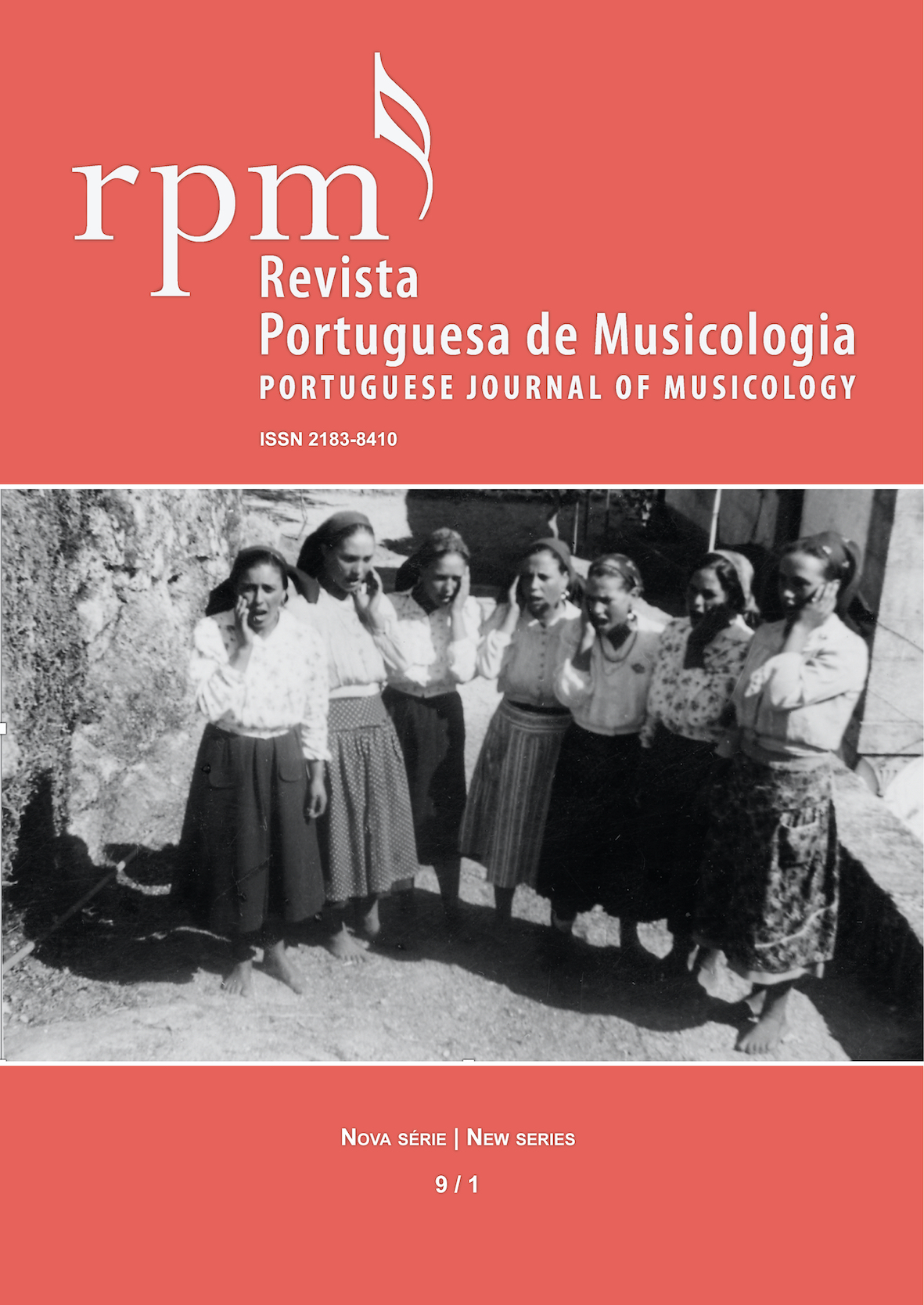
«Este canto é de mulheres!»:
Uma história de dominação, «desaparecimento» e resiliência
DOI:
https://doi.org/10.57885/0016.rpmns.9/1.2022Abstract
The process that led to the recognition of Cante Alentejano by UNESCO encouraged, in Portugal, women to organise themselves to safeguard and recognize the ‘Canto a Vozes de Mulheres’ (women multipart singing) as intangible cultural heritage. They mobilized municipalities and research centers in the pursuit of their project. This paper approaches the process from four topics: (i) the survey of women's multipart singing through the nineteenth and twentieth century ethnography; (ii) the «disappearance» of women multipart singing from the folklorization process in Portugal; (iii) the impact of the UNESCO convention on the sustainability of multipart singing and the ecologies of musical practices sustained in the face-to-face relationship; "iv) the manifest in favour of the intellectual, artistic property rights and governance of women multipart singing; (v) the resilience strategy, in which we, ethnomusicologists also have a role. My objectives are to investigate contexts in which musical competences and traditional practical knowledge enable people to act socially, even in a situation of subalternity; and understand the impact of the UNESCO convention on the intangible heritage of humanity on the sustainability of women’s singing.
Downloads
Published
How to Cite
Issue
Section
License
Copyright (c) 2024 Portuguese Journal of Musicology

This work is licensed under a Creative Commons Attribution-NonCommercial-NoDerivatives 4.0 International License.